


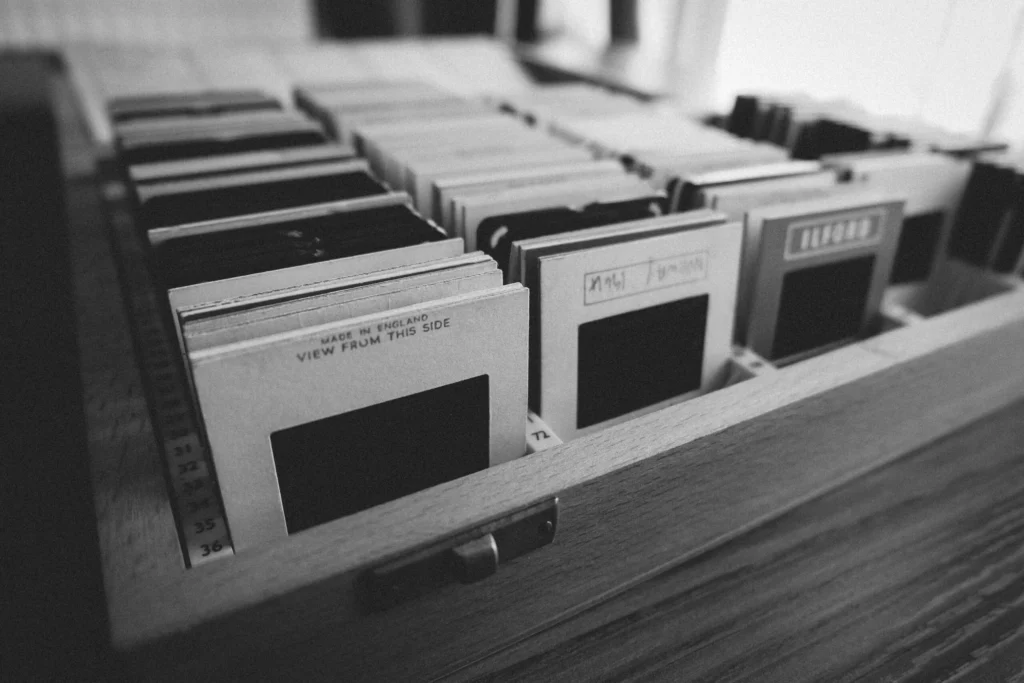
Some ideas are loud. The Lost Art of the Contact Sheet is not one of them. It works in the margins, in the overlooked gestures, and it rewards anyone patient enough to slow down and notice.
The Argument, Properly Stated
We have grown comfortable mistaking speed for progress. But the things that hold up over time were rarely the fastest to make. They were the ones whose makers were willing to sit with a problem long enough to be changed by it.

I have started to think of this as a form of literacy — a way of reading the made world that most of us were never taught, but that anyone can pick up if they are willing to be a little slower and a little more curious.
Anything worth doing is worth doing slowly enough to do it well.
an old workshop sign
A Question of Attention
There is a particular kind of attention that cannot be rushed or automated. It is closer to listening than to looking, and it tends to surface details that the eye, left to its own efficient habits, would happily skip.
| Approach | What it costs | What it gives back |
|---|---|---|
| The fast way | Almost nothing up front | A result you replace within a year |
| The careful way | Time, patience, second-guessing | Something that ages well |
| The honest way | A willingness to be wrong | Trust that compounds quietly |
A note on method
None of this is nostalgia. The point is not that the old ways were better, but that they were more legible — you could see the thinking, follow the hand, understand the trade. That legibility is worth protecting.
Craft hides in the parts nobody is supposed to see. A seam pressed flat, a transition softened, a corner that could have been left sharp but was rounded by hand instead. None of it survives a quick glance, which is precisely why it matters.